How to use this Zambia birding calendar for a luxury safari stay
Zambia rewards birding guests who plan around place, season and water. This Zambia birding calendar best time species guide is written for travelers who care as much about the lodge hide as the room category, and who want a safari guide who knows every call at dawn. When you match the right national park, the right camp and the right month, Zambia birding becomes the quiet architecture of your whole trip.
Think of the country in three broad birding zones that shape your tour planning. The Luangwa and Zambezi river systems hold classic African big game and dense bird species lists, while the rift valley wetlands and dambos pull in more specialist birds. Farther south, the Kafue and the southern plateau parks link naturally with South Africa or even the Okavango Delta for guests building longer birding tours across Africa.
For a luxury traveler, the best time is not only about migrant birds or breeding plumage. It is also about when a safari package includes a specialist safari guide, when the camp runs small group birding tours and when the light over the river is soft enough for serious photography. This guide walks month by month through the green season from November to April and the dry stretch from June to October, always tying species to specific lodges, hides and riverbanks.
Where Zambia fits in an African birding tour
Many guests arrive from Cape Town or Johannesburg, already tuned to African birds from a few days in South Africa. Zambia then becomes the wild, guide led chapter of a longer Africa journey, where you swap self drive reserves for walking safaris and canoe channels. For some, it also sits between a rift valley wetland like Kenya's lakes and a final stop in the Okavango Delta, creating a chain of bird species and habitats that feels almost narrative.
Within Zambia itself, the three headline safari regions for birding are South Luangwa, Lower Zambezi and Kafue National Park. South Luangwa is the best known, with a dense mix of big game and riverine birds, and it is where many luxury properties now offer dedicated birding tours in the shoulder months. Lower Zambezi, by contrast, is all about the river, with African skimmer, Pel's fishing owl and other Zambezi specialists visible from your private deck or canoe.
Kafue National Park sits slightly apart, a big, less trafficked park whose wetlands and miombo woodland reward patient birders. From here, some guests route south to Cape Town for a city break after the bush, while others head north to the Bangweulu Wetlands or the rift valley escarpment for more focused Zambia birding. Throughout this calendar, we will point to specific styles of lodge and camp that work for solo explorers who want both comfort and serious field time.
Green season (November to April): migrants, breeding plumage and lush backdrops
The green season from November to April is when Zambia birding becomes almost operatic. Afternoon storms roll over the rift valley, the bush turns electric green and migrant bird species pour in from the north. For photographers, this is the best time to capture birds in full breeding plumage against saturated backgrounds, even if big game viewing can be more challenging.
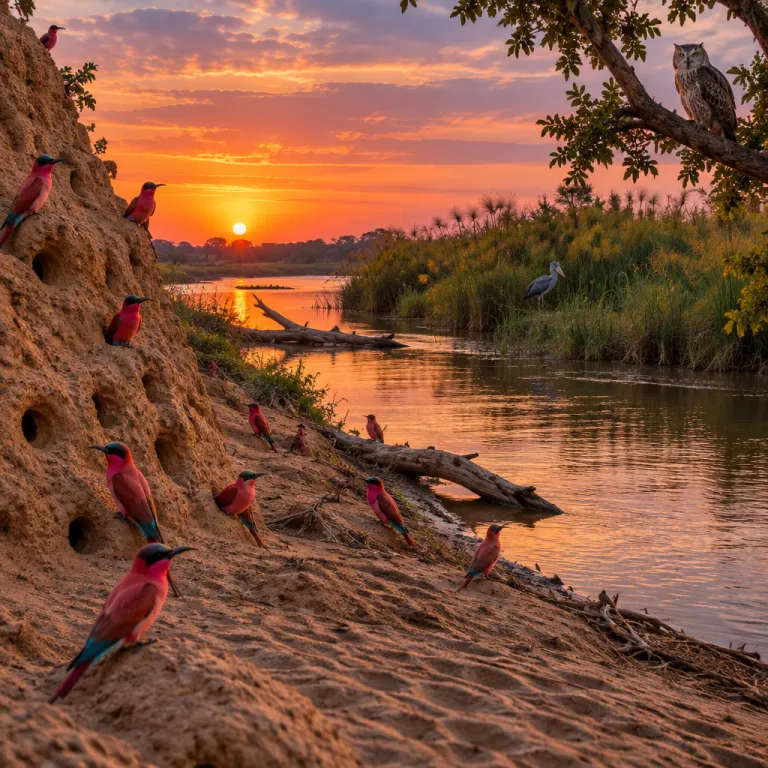
South Luangwa in the early green season offers a powerful mix of resident birds and newly arrived migrants. Carmine bee eaters linger around their nesting banks, while woodland kingfishers, cuckoos and other African migrants fill the soundscape around your camp. Many luxury lodges here, profiled in depth in the village visit and family travel guide, quietly pivot their activity schedule to longer morning birding walks and boat based birding tours when the river level allows.
Bangweulu Wetlands, although more logistically complex than a mainstream national park, is the headline green season destination for Shoebill. The best time is usually during the heart of the rains, when water levels are high enough for the local guides to pole you through the papyrus in search of this prehistoric looking bird. A well designed safari package can pair Bangweulu with a few days in South Luangwa or Lower Zambezi, giving you both the Shoebill and a full suite of riverine bird species without losing comfort.
Luxury lodge experience in the rains
Travelers sometimes worry that the green season means closed camps and compromised comfort. In reality, many of Zambia's top properties stay open through at least part of the November to April window, especially in South Luangwa and Lower Zambezi. The atmosphere is quieter, the rates are often softer and the ratio of birding guests to general safari guests shifts in your favor.
In Lower Zambezi, riverside lodges use the higher water to run gentle boat based birding tours along the main Zambezi channel and its side lagoons. African skimmers, white fronted bee eaters and a rotating cast of waders and terns work the sandbanks, while your safari guide positions the boat for clean photographic angles. Pel's fishing owl is a year round resident here, but the green season often brings more overcast days, which can be kinder to your camera sensor than the hard light of the dry months.
Equipment wise, most high end camps provide quality binoculars in each room and sometimes a shared spotting scope in the main area. Serious birders should still bring their own optics, a telephoto lens of at least 400 millimetres and a lightweight waterproof bag for boat work. If you are planning a longer Africa circuit that includes South Africa or the Okavango Delta, this is also the season when you will want a flexible packing list that can handle both tropical downpours and cooler highland evenings.
Dry season (June to October): visibility, raptors and concentrated river life
From June to October, Zambia shifts into the classic dry season that many safari guests instinctively choose. Grass flattens, leaves fall and water pulls both big game and birds into tighter corridors along the Luangwa and Zambezi rivers. For a Zambia birding calendar best time species guide, this is the period when visibility, not sheer species count, becomes your main ally.
South Luangwa is at its most cinematic in the late dry months, when the river shrinks into oxbow pools and ebony groves stand bare. Carmine bee eater colonies along the Luangwa River are a major draw, with thousands of birds nesting in vertical banks that some lodges access by boat or on carefully guided walks. Elevated camps highlighted in the South Luangwa stays guide give you balcony level views of both birds and big game, which is ideal for solo travelers who like to shoot from their room between drives.
Raptors are another dry season strength, with clear skies and open canopies making it easier to work through tricky African species. Martial eagles, bateleurs and various vultures patrol the river corridors, while smaller raptors hunt over the floodplains and dambos. A good safari guide will structure your time so that early mornings focus on active birds, with big game drives and river time later in the day when the light is harsher and the mammals are more concentrated around water.
Lower Zambezi and the art of river based birding
Lower Zambezi National Park is arguably the most elegant dry season base for a bird focused luxury safari. The park's lodges line the northern bank of the Zambezi, facing Zimbabwe's Mana Pools, and most offer a mix of game drives, canoe trips and motorboat outings. For birders, this variety of angles means you can work the same stretch of river for different bird species across several days without it ever feeling repetitive.
African skimmer colonies on mid river sandbars are a signature sighting here, especially in the late dry season when water levels are at their lowest. Pel's fishing owl roosts in the riverine forest behind some camps, and a patient safari guide can often line up views from the boat at dusk or during a quiet midday walk. While big game viewing is excellent, with elephants and buffalo regularly crossing the river, the best time for birding tours is often when other guests are resting, which suits solo explorers who prefer a flexible rhythm.
From a logistics perspective, June to October is also the easiest period to combine Lower Zambezi with South Luangwa in a single safari package. Scheduled light aircraft flights link the two parks, and some operators extend the circuit to include Kafue or even a hop to Cape Town for a city break. If you are building a longer Africa itinerary that also touches South Africa or the Okavango Delta, this dry window is when flight schedules tend to align most cleanly.
Flagship species by month: carmine bee eaters, Shoebill and Pel's fishing owl
While broad season labels help, serious Zambia birding often comes down to specific months and specific targets. Carmine bee eaters, Shoebill and Pel's fishing owl each have their own rhythm, and this Zambia birding calendar best time species guide is built around those pulses. The art is to anchor your tour around one flagship bird, then layer in other species and parks without diluting the experience.
Carmine bee eaters along the Luangwa River are typically most active at their nesting colonies in the late dry months. Lodges in South Luangwa that sit near known banks sometimes offer special boat based sessions, where you approach the colonies from the water to minimise disturbance and maximise photographic angles. This is also when other bird species cluster along the shrinking river, so your time on the water delivers a rich mix of bee eaters, storks, herons and raptors in a single outing.
Shoebill in Bangweulu Wetlands is a different proposition, tied more to water levels than to a simple calendar line. The green season from roughly November to April is the broad window, but within that, local knowledge of the rift valley flood dynamics matters more than any fixed date. Many travelers pair Bangweulu with a few nights in a more conventional national park like South Luangwa, using a charter flight to bridge the two and keep the overall safari package comfortable.
Year round Pel's fishing owl and other river specialists
Pel's fishing owl is present all year in Lower Zambezi and in some stretches of the Luangwa, but your odds shift with foliage and water level. In the green season, dense leaves can make daytime roosts harder to spot, even if the birds are calling actively at night. During the dry months, a skilled safari guide can often show you a known roost tree from the boat, giving you a stable platform for long lens work.
Other river specialists, such as African skimmers and various kingfishers, also track the Zambezi's changing profile through the year. When sandbars are exposed in the late dry season, skimmers gather in tight colonies that are easy to work from a respectful distance. Earlier in the season, when water is higher, your birding tours may focus more on back channel lagoons and flooded forests, where herons, egrets and smaller bird species feed in softer light.
For guests who want to keep a foot in the city while still chasing river birds, a stay at a wellness focused lodge near Victoria Falls can be a smart bookend. Properties featured in the Victoria Falls lodge review offer easy access to Zambezi cruises that, while not pure birding tours, still produce a satisfying list of birds. This is also a natural point to connect onward to Cape Town or South Africa's wine country if you are building a broader Africa journey.
Specialist guides, hides and how to choose the right lodge
Not every luxury camp in Zambia is equally tuned to birding, even in parks with rich bird species lists. When you read lodge descriptions on myzambiastay.com, look for explicit mention of birding tours, photography hides and named guides with a reputation for ornithology. A property that simply notes "good birdlife" without detail may still be excellent, but it will not serve a serious Zambia birding calendar best time species guide approach as well as a camp that builds its schedule around birds.
South Luangwa has the deepest bench of specialist guides, partly because the park has long marketed itself as the home of the walking safari. Many of these guides cut their teeth identifying birds by call on foot, and they now bring that skill to both walks and drives. When you are comparing safari packages, ask which guides will be in camp during your dates, whether they run dedicated birding drives and whether the lodge has a hide overlooking a waterhole or lagoon.
Lower Zambezi, by contrast, leans into its river setting, with some lodges offering floating hides or anchored pontoons for low angle photography. These can be especially productive in the dry season from June to October, when birds and big game share the same shrinking water sources. A good safari guide here will know not only where Pel's fishing owl roosts, but also how to position a canoe quietly so that you can work a sandbank of African skimmers without flushing the birds.
Equipment, logistics and combining birding with big game
Most high end Zambian lodges provide quality basics, but serious birders should still travel with their own core kit. A pair of 8x or 10x binoculars, a telephoto lens in the 400 to 600 millimetre range and a lightweight tripod or monopod will cover most situations. For guests linking Zambia with South Africa, Cape Town or the Okavango Delta, a compact, airline friendly setup is worth the investment, as many light aircraft have strict weight limits.
Combining birding with big game viewing is less a compromise than a question of rhythm. Early mornings and late afternoons are prime for both, but a bird focused guest will often spend more time stationary, working a single lagoon or colony, while a general safari guest prefers to keep moving. The best time to negotiate this balance is before you book, asking your lodge or tour operator how flexible they are with drive length, group size and the mix of bird species versus mammals on each outing.
For solo explorers, small camps with fewer rooms often provide the most adaptable experience, as it is easier for a safari guide to tailor each drive. When you read through a Zambia birding calendar best time species guide like this one, use it as a framework, then cross check each month and park against the specific lodge you are considering. The right match between season, guide and camp will matter more to your final bird list than any single decision about which national park to visit.
Hidden gem habitats: beyond the headline parks
While South Luangwa and Lower Zambezi dominate most safari brochures, Zambia hides quieter corners that reward patient birders. Kafue National Park, one of Africa's largest reserves, sees a fraction of the traffic of more famous parks in South Africa, yet its wetlands and miombo woodland hold an impressive range of bird species. For travelers who have already ticked the big game boxes elsewhere, Kafue can be the best time investment in the country.
Within Kafue, the Busanga Plains stand out during the dry season from June to October. As water recedes, flocks of birds work the remaining channels, while predators and antelope move across the open grasslands. Some of the more remote camps here now offer simple hides and flexible birding tours, giving you a different rhythm from the river based routines of the Luangwa and Zambezi.
Farther north, the Bangweulu Wetlands and the surrounding rift valley landscapes offer a more specialist experience. Shoebill is the headline, but the area also supports a range of other wetland birds that are hard to see elsewhere in Zambia. Because access can be weather dependent, especially in the heart of the green season, this is a region where working with an operator who understands both birds and logistics is essential.
Endemic and near endemic targets
For birders who track range restricted species, Zambia offers a handful of compelling targets. Chaplin's barbet, sometimes called the Zambian barbet, is a near endemic that draws dedicated birders into specific patches of mopane and mixed woodland. Black cheeked lovebirds, another regional specialty, inhabit certain areas of southern Zambia and adjacent parts of neighbouring countries, and they are often easier to see when water sources shrink late in the dry season.
When planning around these birds, the Zambia birding calendar best time species guide logic still applies. The green season from November to April may bring more vocal activity and brighter plumage, but access and visibility can be harder. In the dry months, especially from June to October, both Chaplin's barbet and black cheeked lovebirds may be more tied to predictable water points, which makes them easier to work into a broader safari package that also includes big game.
Solo travelers who care about these details should not hesitate to ask direct questions of potential lodges. Ask whether their guides know the current territories for Chaplin's barbet, whether black cheeked lovebirds are regular around camp and whether any recent Zambia birding tours have targeted these species successfully. A camp that answers with specifics rather than vague enthusiasm is usually the one that will respect your time in the field.
Key figures for planning a Zambia birding trip
- Zambia hosts more than 750 recorded bird species, placing it among Africa's richer birding destinations in terms of diversity according to regional ornithological surveys.
- South Luangwa National Park alone lists over 400 bird species, which means a focused week in the park can realistically produce several hundred species for an experienced birder.
- Lower Zambezi National Park supports more than 350 bird species along its river and escarpment habitats, making it one of the most productive river based birding areas in southern Africa.
- Bangweulu Wetlands cover roughly 6 000 square kilometres of floodplain and swamp, providing critical habitat for Shoebill and other wetland specialists in the south central African rift valley.
- Kafue National Park spans about 22 400 square kilometres, and its size and habitat variety contribute to a bird list that rivals better known parks in South Africa and the Okavango Delta region.
FAQ about Zambia's birding seasons and luxury stays
What is the best time of year for birding in Zambia ?
The best time depends on your priorities. The green season from November to April brings migrants, breeding plumage and lush photographic backdrops, while the dry season from June to October offers better visibility, easier access and concentrated birdlife around rivers and waterholes. Many birders plan a safari package that straddles the shoulder months, gaining some of each season's strengths.
Which Zambian parks are best for combining birding and big game ?
South Luangwa and Lower Zambezi are the strongest choices for guests who want both rich bird species lists and classic African big game. South Luangwa excels at woodland and riverine birds alongside leopard and other predators, while Lower Zambezi adds African skimmers, Pel's fishing owl and superb elephant viewing along the Zambezi River. Kafue National Park is an excellent third stop for travelers who prefer quieter parks and a more exploratory feel.
Do I need a specialist bird guide, or will any safari guide do ?
A general safari guide can identify many common birds, but a specialist bird guide will transform your experience if you care deeply about species level detail. In South Luangwa and Lower Zambezi, several lodges employ guides known for their birding skills and for running dedicated birding tours. When booking, ask specifically about guide expertise, recent bird focused guests and whether the camp offers flexible, bird led drives.
Can I see Shoebill, carmine bee eaters and Pel's fishing owl on one trip ?
It is possible, but it requires careful routing and season aware planning. Shoebill viewing in Bangweulu Wetlands is usually best in the wetter months, while carmine bee eater colonies along the Luangwa River peak late in the dry season and Pel's fishing owl is most easily seen in Lower Zambezi when foliage is thinner. A tailored Zambia birding calendar best time species guide approach, often with charter flights, is the most reliable way to link all three.
What birding equipment do luxury lodges in Zambia provide ?
Most high end lodges provide a pair of binoculars in each room and sometimes a shared spotting scope in the main area or hide. Some camps also keep field guides to African birds in vehicles and lounges for guest use. Serious birders should still bring their own optics, camera gear and any specialised accessories, as lodge equipment is designed for general safari guests rather than dedicated photographers.