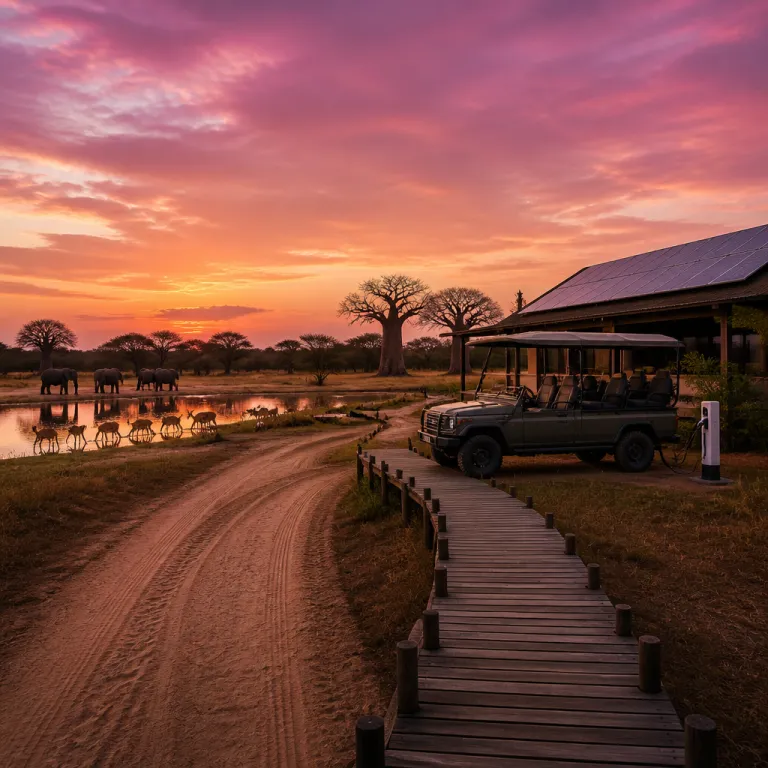
How silent electric game drives are reshaping luxury safaris in Zambia
The phrase green safaris electric game drive zambia has moved from marketing line to measurable reality in the past season. On the ground in Zambia, Green Safaris now runs five solar powered electric vehicles across Kafue, South Luangwa and the Zambezi, turning the classic safari into what guests and guides simply call the silent safari. For travelers booking a premium safari lodge or camp, that shift changes not only the soundscape of game drives but the way wildlife behaves around the vehicle.
On a dawn game drive in South Luangwa National Park, an electric vehicle rolls out of Shawa Luangwa Camp with only tyre crunch and francolin calls breaking the air. Traditional safari vehicles in Zambia and across Africa rely on diesel, yet here the electric safari vehicles glide close to a herd of elephant without the usual engine growl, allowing longer viewing and calmer animal behaviour during both single game drive and longer drives. One guest summed it up in a way the marketing team could never script: “What is a silent game drive? A safari using electric vehicles for noise-free wildlife viewing.”
For solo travelers choosing between a conventional safari and the Green Safaris model, the sensory difference is immediate and repeatable across multiple safaris. At Shawa Luangwa, at Ila Safari Lodge in Kafue National Park and at Chisa Busanga Camp on the Busanga Plains, the same pattern emerges as electric vehicles approach lion, wild dog or cheetah on open grassland game viewing. Guides report that animals tolerate closer proximity, while guests focus on the experience rather than engine noise, which is exactly what a luxury lodge in Zambia should be selling when it promotes green technology and electric game drives.
Inside the $410,000 conservation spend and solar powered operations
Green Safaris’ latest impact report puts hard numbers behind the green safaris electric game drive zambia narrative that many luxury travelers now expect to interrogate. The Green Safaris Conservation Foundation confirms that 410,000 USD has been channelled into education, community upliftment and wildlife protection across Zambia and neighbouring Malawi, with 201 anti poaching operations, 22,000 tree seedlings grown in dedicated nurseries and a further 70,000 trees planted through landscape restoration projects, and 300 children enrolled in Kafue Conservation Education Clubs. The organisation summarises its model in plain language: “How does Green Safaris support communities? Through education, healthcare, and sustainable development projects.” These figures are drawn from the group’s published conservation impact report and supporting internal audits, which are periodically reviewed by independent advisors.
Key impact metrics at a glance
- US$410,000 invested in conservation and community projects in Zambia and Malawi
- 201 anti-poaching patrols supported through lodge and game drive revenue
- 22,000 indigenous tree seedlings raised for national park buffer zones, contributing to almost 100,000 trees established in total
- 300 children participating in Kafue Conservation Education Clubs
- Operations now roughly 80% solar powered across the Green Safaris portfolio
On the ground, that funding translates into solar infrastructure at each safari lodge, from Ila Safari Lodge on the Kafue River to the island style luxury of Sindabezi Island near Victoria Falls, and on to Kaya Mawa on Lake Malawi where electric boats complement the electric vehicle fleet. Across the portfolio, operations are now roughly 80 percent solar powered, saving an estimated 29,200 litres of diesel and 850,000 litres of water each year, while almost 100,000 trees have been planted in and around national park buffer zones. A 12.6 hectare organic farm has been handed to the Mukuni Development Trust near Victoria Falls, supplying fresh produce to lodges and nearby communities, which matters when you are assessing whether a green safari in Zambia is more than a marketing line. Conservation NGOs working in Kafue and South Luangwa have highlighted similar solar powered and electric vehicle projects as a practical way to cut emissions while funding local livelihoods.
For guests comparing Green Safaris properties with other high end camps in South Luangwa National Park or near Victoria Falls, the data offers a rare level of transparency in Africa’s safari sector. Silent safari operations with electric vehicles and solar powered boats now run in both Zambia and Malawi, while the group’s conservation spending has been recognised with a Best Sustainability Practices award at the Zambia CSR Awards, cited for linking tourism revenue to measurable outcomes. Independent industry observers, including regional tourism associations and conservation NGOs, have highlighted similar electric vehicle and solar initiatives as a benchmark for responsible travel in southern Africa. If you are planning extended game drives, night drives or photographic hides, it is worth reading detailed activity breakdowns such as the photographic hides and night drives guide on MyZambiaStay, then asking each lodge how its safari vehicles, electric or not, contribute to the same level of measurable impact.
Is the silent safari premium worth it for Zambia’s luxury travelers?
For a solo explorer weighing up the green safaris electric game drive zambia proposition against a conventional diesel based safari, the question is whether the premium delivers a meaningfully different experience. On a practical level, electric safari vehicles at Ila Safari Lodge, Shawa Luangwa Camp, Chisa Busanga Camp and the island hideaway of Sindabezi Island reduce noise, fumes and vibration, which makes long game drives less tiring and more immersive. The same applies on the Busanga Plains where Busanga Camp and Chisa Busanga operate in open grassland, and on Lake Malawi where Kaya Mawa pairs electric boats with the occasional electric vehicle transfer to keep the wider safari experience aligned with its green positioning.
Compared with many operators in Zambia’s national parks, which still rely entirely on diesel safari vehicles and generators, Green Safaris’ mix of solar power, electric vehicles and community investment stands out in a crowded Africa luxury market. Some peers in South Luangwa National Park and Lower Zambezi now trial partial solar systems or hybrid vehicles, yet few publish conservation spending line by line or link each game drive to specific outcomes such as anti poaching patrols or education clubs. For travelers who care about impact, it is worth reading in depth reserve reports such as the analysis of Lolelunga private reserve north of Kafue on MyZambiaStay, then asking how each lodge or camp in Zambia benchmarks its own green performance.
From a booking perspective, the silent safari premium is most compelling when combined with strong guiding, thoughtful camp design and access to varied habitats rather than just a single park. A guest might pair South Luangwa walking safaris from a classic safari lodge with electric game drives at Shawa Luangwa, then add a few nights at Ila Safari for river based game viewing and finish near Victoria Falls or Lake Malawi for a softer landing. Families and solo travelers can cross check which lodges genuinely support children’s education and community projects through resources such as MyZambiaStay’s guide to where to stay in Zambia with children, ensuring that each electric vehicle, each solar panel and each game drive contributes to a wider conservation story that justifies the higher nightly rate.